Using the ORS (Occupational Requirements Survey) as a Sword and Shield in Disability Hearings – 2026 Spring National Conference – Track II (Presented by National Organization of Social Security Claimants’ Representatives)
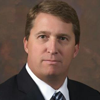
Douglas Mohney is a Board Certified Social Security Attorney certified by the National Board of Trial Advocacy, with a practice spanning federal disability litigation, veterans' benefits, and Social Security claimant representation across Michigan and Florida.
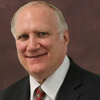
Craig Polhemus is a Board Certified Social Security Attorney certified by the National Board of Trial Advocacy, with one of the most distinctive and multidisciplinary careers in the disability field.
1.25 hour CLE
Get this course, plus over 1,000+ live webinars.
Learn More
Program Summary
This presentation examines how attorneys can use the Occupational Requirements Survey (ORS) to challenge vocational expert testimony in disability hearings. The session explains ORS definitions, job demand classifications, and how they relate to RFC findings. Through practical examples, attorneys will learn how to rebut vocational testimony and strengthen post-hearing briefs using ORS data.
Eligible for up to 1 CLE Credit Hour
This session was originally submitted for CLE as a live, in-person presentation and a live webcast for the 2026 Spring National Conference and may be eligible for self-study credit. Each state handles self-study credit differently; for questions, please consult your State Bar Association.
Recorded Thursday, April 23, 2026
- The development and structure of the ORS
Learn how the Bureau of Labor Statistics created the Occupational Requirements Survey and how its methodology differs from traditional vocational resources. - Using ORS data to challenge vocational testimony
Examine strategies for identifying inconsistencies between vocational expert testimony and the job requirement data documented in ORS. - Physical and mental job demand analysis for RFC findings
Understand how ORS classifications of physical activities, environmental demands, and cognitive requirements affect residual functional capacity determinations. - Integrating ORS evidence into hearing and briefing strategy
Explore ways to incorporate ORS data into cross-examination, evidentiary arguments, and post-hearing submissions.
This course is co-sponsored with myLawCLE.
Date / Time: April 23, 2026
- 1:30 pm – 2:45 pm Eastern
- 12:30 pm – 1:45 pm Central
- 11:30 am – 12:45 pm Mountain
- 10:30 am – 11:45 am Pacific
 Closed-captioning available
Speakers
Douglas Mohney, Esq., Board Certified Social Security Attorney
Douglas Mohney is a Board Certified Social Security Attorney certified by the National Board of Trial Advocacy, with a practice spanning federal disability litigation, veterans’ benefits, and Social Security claimant representation across Michigan and Florida. He earned a Bachelor of Science from Western Michigan University (1989), an Associate of Applied Science in Law Enforcement from Kalamazoo Valley Regional Training Academy, and a Juris Doctor, Cum Laude, from Detroit College of Law at Michigan State University (1992). Doug is admitted to practice in Michigan and Florida, multiple federal district and circuit courts, and the Supreme Court of the United States. He has served as the NOSSCR Eleventh Circuit Director since 2015 and has been a regular presenter at NOSSCR national conferences on a range of complex Social Security disability topics.
- Education & Credentials
Doug earned a Bachelor of Science from Western Michigan University (1989), an AAS in Law Enforcement from Kalamazoo Valley Regional Training Academy, and a Juris Doctor, Cum Laude, from Detroit College of Law at Michigan State University (1992). He is admitted to practice in Michigan (1992) and Florida (1994), as well as the U.S. District Courts for the Western and Eastern Districts of Michigan, the Middle and Northern Districts of Florida, the U.S. Court of Appeals for the Eleventh Circuit, the U.S. Court of Appeals for Veterans’ Claims (as an Accredited Veterans’ Attorney), and the Supreme Court of the United States. He holds the Board Certified Social Security Attorney designation from the National Board of Trial Advocacy and carries AV Preeminent® peer review and judicial review ratings from Martindale-Hubbell — the highest possible ratings in both categories.
- Recognition & Leadership
Doug’s professional recognition includes his Board Certified Social Security Attorney credential from the National Board of Trial Advocacy, dual AV Preeminent® ratings from Martindale-Hubbell for both peer review and judicial review, and his tenure since 2015 as the NOSSCR Eleventh Circuit Director. He also serves on the Board of Directors of the Southwest Florida Justice Association (2016–present). His Supreme Court admission, his Accredited Veterans’ Attorney designation, and his regular NOSSCR national conference speaking record — covering topics ranging from federal court litigation strategy to medical expert cross-examination — reflect a career of exceptional breadth and sustained professional distinction.
- Professional Involvement
Doug is a member of the American Association for Justice, the American Bar Association, the Southwest Florida Trial Lawyers Association, the Florida Justice Association, and NOSSCR, where he has served as Eleventh Circuit Director since 2015. He also serves on the Board of Directors of the Southwest Florida Justice Association. His conference speaking record at NOSSCR national meetings reflects consistent engagement with the most technically complex issues in disability practice — including federal court bypass strategies, the five-day evidence rule, drug and alcohol abuse disabilities, limited English proficient claimants, and the cross-examination of SSA medical experts.
- Experience
Doug Mohney’s career in Social Security and disability law spans decades and multiple jurisdictions, with admissions to state bars in Michigan and Florida and to federal courts from the district level through the Supreme Court of the United States. His Accredited Veterans’ Attorney designation adds a veterans’ benefits dimension to a practice already defined by depth in Social Security disability litigation. He has presented at NOSSCR national conferences in Seattle, Washington D.C., Atlanta, and New Orleans on topics including federal court appeals strategy, SSA evidence rules, drug and alcohol abuse disabilities, interpreter issues, professional ethics, and the cross-examination of medical experts — a body of speaking work that reflects the full range of complex issues practitioners encounter in federal disability litigation. His AV Preeminent® ratings and Board Certification further underscore a career of consistently high professional achievement.
Craig Polhemus, Esq., Board Certified Social Security Attorney
Craig Polhemus is a Board Certified Social Security Attorney certified by the National Board of Trial Advocacy, with one of the most distinctive and multidisciplinary careers in the disability field. A Princeton University graduate, Cum Laude (B.A., 1974), and Georgetown University Law Center graduate and Law Journal editor (J.D., 1977), Craig’s career has spanned federal legislative counsel work, state government general counsel service, nonprofit executive leadership, and economics scholarship — before his decades in Social Security disability practice. He is admitted to practice in New York (1978) and Florida (2011) and has presented at NOSSCR national conferences on complex disability topics including federal court bypass strategy and drug and alcohol abuse disabilities.
- Education & Credentials
Craig earned a Bachelor of Arts, Cum Laude, from Princeton University (1974) and a Juris Doctor from Georgetown University Law Center (1977), where he served as an editor of the Georgetown Law Journal. He is admitted to practice in New York (1978) and Florida (2011), and holds the Board Certified Social Security Attorney designation from the National Board of Trial Advocacy. His legal credentials are complemented by a career that includes federal legislative drafting, state general counsel service, and published economics work — an intellectual breadth that is rare among disability practitioners and that enriches his analytical approach to complex Social Security claims.
- Recognition & Leadership
Craig’s career achievements span federal law, state government, nonprofit leadership, and disability advocacy. As Counsel and Staff Director of the U.S. Senate Subcommittee on Alcoholism and Drug Abuse, he served as the primary author of two pieces of federal legislation reauthorizing and reforming the National Institutes on Alcohol Abuse and Drug Abuse. As General Counsel for the New York State Office for the Aging, he directed a statewide legal services program and authored numerous state laws affecting older New Yorkers. He has served as Executive Director of the American Accounting Association and of the Prader-Willi Syndrome Association (USA), and his Board Certified Social Security Attorney designation reflects the professional distinction he has earned in his disability practice. His Georgetown Law Journal editorship and his Princeton Cum Laude distinction anchor an academic record of the highest caliber.
- Professional Involvement
Craig’s professional involvement has encompassed federal legislative drafting, state government counsel work, association executive leadership, economics publication, and disability advocacy. He wrote a column on legal ethics for the Sarasota County Bar Association newsletter and authored labor relations content for the Dow Jones-Irwin Business Almanac (1977 and 1978), as well as monthly columns and annual summaries of significant labor decisions for the Monthly Labor Review during his tenure as an Economist with the U.S. Bureau of Labor Statistics. At NOSSCR, he has presented at national conferences in Washington, D.C. and New Orleans on federal court appeals strategy and the treatment of drug and alcohol abuse disabilities — topics that draw on the deep policy and legal background he has accumulated across a uniquely varied career.
- Experience
Craig Polhemus brings one of the most richly varied professional backgrounds in the Social Security disability field. His career began with economics scholarship at the U.S. Bureau of Labor Statistics, progressed through federal legislative work as Counsel and Staff Director of the Senate Subcommittee on Alcoholism and Drug Abuse — where he authored legislation reforming NIAAA and NIDA — and continued through service as General Counsel for the New York State Office for the Aging, where he directed statewide elder law services and drafted New York State legislation. He has led two national nonprofit organizations as executive director and written on legal ethics for the Sarasota County Bar. His disability practice, recognized through Board Certification by the National Board of Trial Advocacy, represents the capstone of a career defined by exceptional public service, legislative impact, and intellectual range. His NOSSCR speaking record reflects a practitioner who continues to bring that breadth of experience to the advancement of the disability advocacy profession.
Agenda
I. Using the ORS (Occupational Requirements Survey) as a Sword and Shield in Disability Hearings | 1:30pm – 2:45pm
Detailing the history, definitions and use of ORS at hearings to defeat vocational witness testimony. The presentation will explain and analyze the history of the ORS, its definitions, critical job functions and job demands, physical vs. mental limitations for RFCS. Real world analysis and presentation of fact scenarios for vocational testimony rebuttal. Also using ORS for post-hearing briefs.
More CLE Webinars
Trending CLE Webinars










Upcoming CLE Webinars

![Attorney–Client Privilege and Work Product: Managing Waiver Risk, Internal Investigations, Regulatory Scrutiny, and Third-Party Communications (2026 Edition) [Includes 1 Ethics hour]](https://miamidadebarcle.org/wp-content/uploads/2026/01/Product_img_-Attorney–Client-Privilege-and-Work-Product.jpg)







































© 2026 Miami Dade Bar